
Residential Drywall Repair in Mount Dora, FL
Most drywall repairs start small. A doorknob goes through the hallway wall, a hairline crack appears above a doorway, or a corner gets clipped moving furniture. None of it threatens the house, but it sits there in your line of sight every day until someone deals with it. Mount Dora Drywall Pros repairs damaged drywall in homes across Mount Dora and the wider Lake County area, covering everything from a single patch in a bedroom to a whole wall that has been knocked around over the years. The work is less about the hole and more about what surrounds it, because a repair only succeeds if you cannot find it afterward.
That is the part homeowners underestimate. Cutting out damage and screwing in a new piece of board takes very little time. Making that piece disappear takes feathering the compound out far enough that no ridge catches the light, matching whatever texture is already on the wall, and priming the patch so the paint does not flash a different sheen over the repair. We also look at why the damage happened before we cover it. A crack that keeps returning in the same place is telling you something about movement, moisture, or a missing fastener, and patching over it just resets the clock. Send us a photo of what you are dealing with and request a quote, and we will tell you what the repair actually involves.
Get a FREE Quote.
Drywall Repair FAQs in Mount Dora
Will the repair be visible once it is painted?
Done properly, no. The goal is a repair you cannot locate afterward, which depends on three things: feathering the compound wide enough that no edge catches the light, matching the existing texture accurately, and priming the patch before paint. Skipping the primer is the most common reason a repair shows, because bare compound absorbs paint differently to the surrounding wall and leaves a dull patch. On a heavily textured or aged surface, matching takes more work, and we will tell you upfront if a perfect blend is going to be difficult.
Why does the same crack keep coming back after I patch it?
It keeps coming back because the movement causing it has not stopped. Cracks at the wall-to-ceiling junction, above doorways, or along a seam usually come from framing movement, truss uplift, or seasonal expansion, and filling the line with compound just hides it until the next cycle. A lasting repair means opening the crack, reinforcing the joint properly, and in some cases using a detail that allows for movement instead of fighting it. We look at where the crack sits and what direction it runs before deciding how to treat it.
Do I need to repaint the whole wall or just the patched area?
It depends on the paint. If you have the original paint and the wall was painted recently, spot painting sometimes works. More often the surrounding paint has faded or yellowed slightly with age and sun exposure, so a touch-up leaves a visible patch even when the drywall repair itself is invisible. Painting corner to corner, or at least out to the nearest natural break, gives a far better result. We can prime the repair and leave it ready for your painter, or discuss including the painting in the scope.
How many visits does a typical repair take?
Most repairs need two visits, sometimes three. Compound has to dry between coats, and forcing the next coat onto a damp one causes cracking and shrinkage later. A small, simple patch on a flat wall can occasionally be completed in one visit if the timing works out. Larger repairs, textured surfaces, and ceilings usually need the extra pass. Humidity affects drying time here, so we give you a realistic schedule rather than promising a same-day finish that compromises the result.
Is a hole in the wall something I should fix right away?
For a clean impact hole there is no urgency beyond appearance, though open holes do let dust and pests into the wall cavity. Damage worth acting on quickly is anything soft, stained, or spreading, because that points to moisture, and moisture problems get more expensive the longer they run. The same goes for cracks that are visibly widening. If you are not sure which category yours falls into, send a photo and we will tell you whether it can wait.
Can you repair drywall without making a mess of the whole house?
Yes, and it is standard practice for us. We contain the work area, cover furniture and floors along the route in and out, and control sanding dust rather than letting it drift through the property. Some fine dust is unavoidable in the immediate area, but it should not end up in rooms you are not working on. We clean the space at the end of each visit instead of leaving it until the final day, which matters when you are living in the house while the repair is underway.
What Does My Drywall Project Cost?
Drywall is priced by the square foot of wall and ceiling surface — not by the size of your floor. That one fact explains most of the gap between quotes. Here are the ranges we see on real jobs around Mount Dora, and a calculator built on the same numbers.
Drywall Repair & Patch
Most single repairs land between $250 and $800. Pros price patches by the square foot of damaged area — roughly $55–$75 a foot around Mount Dora — but every repair carries a minimum job charge, because a patch takes the same setup and the same repeat trips for drying coats whether it's the size of a dinner plate or a door. Grouping several spots into one visit is the cheapest way to fix them: they share one minimum. Some repairs are priced flat by the job instead of the square foot: a cut-out ceiling section replaced and texture-matched (an 8×10 section ran $720 flat), long seam cracks (46 linear feet of re-taped seams across three rooms ran $540 flat), and popcorn removal finished smooth (230 sq ft ran $575 flat).
New Drywall Installation
For bare studs finished paint-ready (a standard Level 4 finish), plan on $1.60–$3.00 per sq ft of wall and ceiling surface, materials and labor included. A typical 12×12 bedroom with 8-foot ceilings — that's 528 sq ft of surface — runs about $890–$1,670 around Mount Dora.
Room Remodel & Replacement
Tearing out old drywall and hauling it off adds $0.60–$1.25 per sq ft on top of new installation — a combined $2.20–$4.25 per sq ft. That same 12×12 bedroom, gutted and re-drywalled, runs about $1,210–$2,330. Opening walls can uncover surprises — water damage, old wiring — and those get priced once they're visible, never guessed at in advance.
Garage Drywall
Garages run $1.55–$3.30 per sq ft depending on finish. Code requires 5/8-inch fire-rated (Type X) board on the wall shared with the house, and on the ceiling when there's living space above it — that's the fire separation, not an upsell. Most two-car garages land between $1,900 and $4,100 finished.
Texture, Skim & Paint
On walls that are already up: skim coating runs $0.95–$1.30 per sq ft, orange-peel or knockdown texture $0.80–$1.85, and primer plus two coats of paint $1.05–$2.85. A typical room's walls — about 415 sq ft of surface — usually land between $770 and $1,960 for texture and paint together.
What Moves the Price
- Finish level. A full Level 5 skim coat (for gloss paint or bright, raking light) costs more than standard paint-ready Level 4.
- Ceilings. Overhead work runs roughly 20–25% more than the same area on a wall — lifts, heavier board, two sets of hands.
- Ceiling height. Taller walls mean longer sheets, scaffolding, and slower work.
- Texture matching. Blending a patch into existing orange peel or knockdown is hand work, and it's priced like it.
- Tear-out. Removing old drywall and disposing of it is its own line on the quote.
- Job size. Small jobs carry a minimum charge; on big jobs the setup spreads over more feet, so the per-foot price drops.
These are planning ranges, not a quote — your final price is confirmed after an in-person look, before any work starts.
A note on materials. These ranges are figured with standard drywall board and the finish level you pick above. Board isn't all the same price, though: moisture- and mold-resistant board — the green or purple board for bathrooms and basements — costs more a sheet than standard board, and on a big job that can push you toward the top of your range, or a little past it. Tell us where the work is and we'll confirm the exact board and the price at the in-person estimate, before any work starts.
Estimate Your Project
Measure the damaged section itself — length × width. A full 4×8 sheet section is 32 sq ft.
Spots done in one visit share a single minimum charge.
Price includes tearing out the old drywall and hauling it off.
Includes 5/8″ Type X fire-rated board on the wall shared with the house — and on the ceiling when there is living space above it — as code requires.
Free — no obligation. Your calculator numbers ride along with the request.
Send Your Project to Mount Dora Drywall Pros
Your estimate is attached automatically. Add your info and — if you can — a few photos of the project. Photos help us price the job before we ever set foot in the house. Prefer to talk? Call (352) 623-5928.
Why Mount Dora Homeowners Call Us for Repairs
Small jobs get treated like small jobs by a lot of contractors, which usually means a rushed patch, a mismatched texture, and a crew that never comes back for the second coat. Mount Dora Drywall Pros takes repair work seriously because it is the most visible thing we do. Nobody inspects a newly built wall the way they inspect a patch in their own living room, under the lamp, from three feet away. We prepare the area properly, use the right compound for the situation, and build the repair up in coats rather than trying to fill everything in one pass.
We also show up when we say we will and keep the mess contained, which matters more on a repair than on a construction site because you are living in the room. Furniture gets moved or covered, floors are protected, and sanding dust is controlled rather than left to settle across the house. You get a clear explanation of what caused the damage, what the repair includes, and whether painting is part of the scope or something you are arranging separately. If a repair is not the right answer and a section genuinely needs replacing, we will say that instead of charging you for patchwork that will not hold. Check availability and we will let you know how soon we can get there.
Our Residential Drywall Repair Services
Damage to drywall comes in a handful of familiar forms. Each one calls for a slightly different fix. A clean puncture is straightforward. A long crack needs the cause addressed first. A soft, crumbling area usually means cutting back further than the damage looks. Below are the home repairs we are called out for most often around Mount Dora.
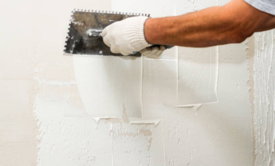
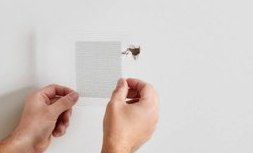
Hole and Puncture Repair
Cutting out and patching holes from doorknobs, furniture, impacts, and removed fixtures so the surface reads flat again.
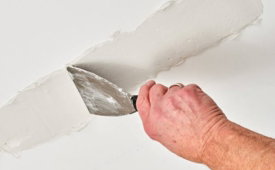
Wall and Ceiling Crack Repair
Repairing settlement, stress, and joint cracks, including reinforcing the joint so the same line does not reopen.
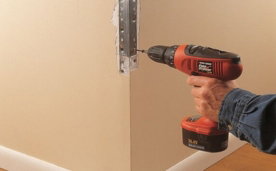
Damaged Corner and Bead Repair
Replacing dented or split corner bead on external angles that have been knocked by furniture, traffic, or moving day.
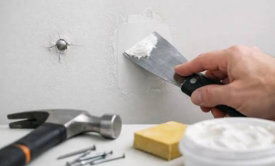
Nail Pop and Fastener Repair
Resetting fasteners that have worked loose and refinishing the surface where screws or nails have pushed through the paint.
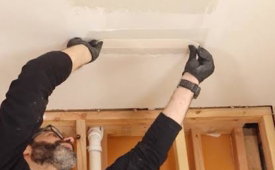
Failed Seam and Tape Repair
Removing bubbled, lifting, or cracked tape along seams and re-taping the joint so it sits flat and stays that way.
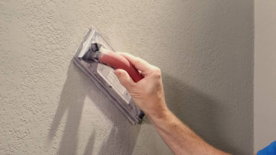
Texture and Finish Blending
Matching the existing wall or ceiling texture across the repair so the patch disappears once it is primed and painted.
What We Check Before Patching a Wall
The first question on any repair is whether the damage is the whole story. A hole from a door handle is exactly what it appears to be, but a crack, a soft patch, or a stain usually has something behind it. Before we cut, we check for moisture, look at whether the damage sits on a plumbing wall or under an air conditioning line, and see whether the crack follows a joint or runs across the board. On older homes we also check the fastening, because a wall built on furring strips or aged framing can be loose in places and no amount of compound will hold a patch that is sitting on a moving surface. If we find an active leak or a structural issue, we tell you before covering it up.
The second consideration is the finish you already have. Repairing the board is repeatable work, but matching what is around it is where jobs succeed or fail. Older homes in the area often have hand-applied textures, decades of paint build-up, and walls that are no longer perfectly flat, so the patch has to be blended rather than simply filled. Ceilings are harder again, because light crosses them at an angle that shows up every imperfection. Humidity plays a role too, since compound takes longer to cure in a house without the air conditioning running, and rushing the next coat onto a damp one is how a repair ends up cracking a few months later.
Common Wall Damage in Local Homes
The age of a house around Mount Dora tells you a lot about the repairs it will need. Older properties near the town center tend to show settlement cracks above doors and windows, seams that have opened at the ceiling line, and corners that have taken decades of traffic. Many of these homes have plaster or older board with textures that no longer match anything sold today, so blending is the real skill on those jobs. Newer subdivisions bring a different list, mostly nail pops and truss-related cracking at the wall-to-ceiling junction during the first couple of years as the framing settles and dries out.
Climate drives a lot of it too. The long humid season and the sharp temperature difference between conditioned rooms and hot attic spaces cause expansion and contraction that shows up right where the ceiling meets the wall. Homes with vaulted ceilings and open plans tend to crack along the same predictable lines. Garages, lanais, and enclosed porches see damage that living areas do not, because those spaces swing between hot and humid without climate control, which softens board over time and loosens fasteners. Storm season contributes its own share, from wind-driven water finding a way in to impacts during cleanup. We hand the same older-home repairs in Eustis, Tavares, and Fruitland Park.
What Determines the Price of a Drywall Repair
Repair pricing tracks access and finishing time far more than the size of the damage. A patch in an open wall at waist height is quick. The same patch behind a staircase, on a high ceiling, or in a tight closet takes considerably longer because of setup, ladders, and the awkwardness of working in the position. Ceiling repairs generally cost more than wall repairs for that reason. Repairs that require lifting gear or scaffolding more again. The number of separate repair areas matters too, since five small patches across a house involve five setups and five clean-ups.
The finish is the other half of the figure. A flat, untextured wall in a recently painted room is straightforward to blend. A hand-textured ceiling, an older wall with heavy paint build-up, or an unusual finish takes trial passes to match and can add a visit. Multiple coats of compound need drying time between them, so most repairs involve more than one trip, and humidity can stretch that out. Whether painting is included, whether the cause of the damage needs fixing first, and whether furniture and contents need moving all feed into the quote. Send photos when you request a quote and we can give you a much sharper estimate before we arrive.
How We Handle a Drywall Repair, Start to Finish
Step 1: Photos, Description, and Initial Assessment
You send photos and tell us what happened and when. That is usually enough for us to identify the type of damage, flag anything that looks like a moisture or movement issue, and give you a realistic idea of scope before anyone visits.
Step 2: On-Site Inspection and Cause Check
We inspect the damaged area, check the surrounding board for moisture, softness, and loose fastening, and work out whether the damage is isolated or a symptom of something else. You get a straight answer on what needs fixing first.
Step 3: Written Quote and Scope Agreement
You receive a clear quote covering the repair areas, the number of visits likely required, whether texture matching is involved, and whether priming or painting is included. Work starts once you approve it.
Step 4: Room Protection and Preparation
Furniture is moved or covered, floors are protected, and the work area is contained so dust does not travel through the house. On multi-room jobs we work in stages to keep disruption in one area at a time.
Step 5: Cutting Back and Board Replacement
Damage is cut back to sound board and solid framing, backing is added where needed, and a new piece is fitted and fastened so the patch has no movement in it. Loose fasteners nearby are reset at the same time.
Step 6: Taping, Compounding, and Feathering
Joints are taped and built up in coats, each one feathered wider than the last so there is no ridge to catch the light. Drying time between coats is respected rather than rushed.
Step 7: Texture Matching and Surface Blending
The existing texture is matched across the repair and blended into the surrounding surface. We test the match before committing to it so the patch reads as part of the wall rather than a circle of new work.
Step 8: Priming, Cleanup, and Final Check
The repair is primed so paint will not flash over it, dust and debris are removed, and we look at the finished area under natural and artificial light with you before calling it done.
Get a Clear Quote on Your Project
The next step is a straight conversation about the space itself. Tell us what you are dealing with, send through photos or plans if you have them, and we will let you know what the work involves, how long it should take, and what it will cost. There is no obligation attached to an estimate, and we would rather spend the time getting the scope right than hand you a number that changes halfway through the job.
Mount Dora Drywall Pros works with homeowners, builders, property managers, and business owners across Mount Dora and the surrounding Lake County area. Request a quote or check availability. You will get a clear answer on timing rather than a vague callback promise. If your schedule is tight or you are coordinating around other trades, tell us upfront. We will plan the work around it.
Related Services
Drywall Repair · Drywall Patching · Water Damage Drywall Repair · Drywall Ceiling Repair · Drywall Replacement · Commercial Drywall Repair · Drywall Installation · Residential Drywall Installation · Commercial Drywall Installation · Garage Drywall Installation · Metal Stud Framing · Drywall Partition Installation · Fire-Rated Drywall Installation · Moisture & Mold-Resistant Drywall Installation · Soundproof & Acoustic Drywall Installation · Suspended Ceiling Installation · Drywall Finishing · Drywall Taping & Mudding · Drywall Texture Matching · Popcorn Ceiling Removal · Drywall Painting & Finishing