
Popcorn Ceiling Removal in Mount Dora, FL
Popcorn ceilings date a room faster than almost anything else. They collect dust, they are impossible to clean, they shed when anything brushes against them, and they make repairs obvious because nobody can match the pattern convincingly. Mount Dora Drywall Pros removes popcorn and acoustic textures from ceilings in homes and commercial buildings across Mount Dora and Lake County, then refinishes the surface to a smooth, paint-ready finish. It is one of the most noticeable changes you can make to a room without touching the layout, and it makes every ceiling that follows it easier to maintain.
There is one question that has to come first, and it is not negotiable. Textured ceiling products applied in older buildings may contain materials that require testing before any removal work begins. Age alone does not confirm it either way. The only responsible approach is testing before scraping, because removal without knowing turns a straightforward job into a serious problem. We raise this before quoting rather than after. If testing indicates specialist handling is needed, we will tell you plainly and point you to the right professionals. Once that question is settled, the rest is a controlled, well-understood process. Tell us about your ceiling and request a quote.
Get a FREE Quote.
Popcorn Ceiling Removal FAQs in Mount Dora
Should my ceiling be tested before removal?
Testing is warranted if the property is old enough that the texture could date from the decades when certain materials were in common use. Testing is inexpensive relative to the risk. It is the only way to know, since you cannot tell by looking. A qualified laboratory analyzes a sample and gives you a definitive answer. If the result indicates specialist handling is required, removal becomes a licensed abatement job rather than drywall work. We will direct you accordingly. If it comes back clear, we proceed as normal.
Is popcorn removal as messy as people say?
It is the messiest job in drywall, which is exactly why containment matters so much. Scraping produces a continuous fall of wet debris across the whole room, and sanding the skim coats afterward adds fine dust. Managed properly with sealed containment, full floor and surface protection, isolated HVAC returns, and daily clean-down, the mess stays in the room being worked on. Managed badly, it ends up in your flooring, your trim, and your air system. Most of the disruption is confined to the work area.
Can you remove texture that has already been painted over?
It is possible but considerably harder. Unpainted texture softens with water and scrapes off relatively cleanly. Paint seals the surface, so water no longer penetrates, and removal becomes slow, laborious work with a much higher chance of damaging the board underneath. In some cases the better answer is skim coating over the existing texture or installing new board over the ceiling instead. We assess which approach makes sense for your ceiling and price the realistic options rather than committing to the hardest one by default.
Do I have to move out while the work is done?
Not usually, though the rooms being worked on will be unusable for the duration. We seal off the work area so the rest of the property stays livable, and most homeowners stay in place for one or two rooms at a time. For a whole-house removal it is more disruptive, since multiple rooms are out of use and the program runs over several days with drying time between coats. Bedrooms are worth scheduling carefully. We will set out a realistic plan so you can decide.
Why does the ceiling need skim coating after the texture comes off?
Textured ceilings were often applied to avoid finishing the board properly in the first place. Scraping the texture frequently exposes unfinished joints, visible tape, popped fasteners, and uneven board. Even where the underlying work was sound, the scraping process leaves a surface that is not smooth enough to paint. Skim coating creates one consistent, flat plane across the whole ceiling so it reads properly under light. Skipping it is the main reason some removal jobs look worse afterward than before.
Is it cheaper to cover the popcorn ceiling instead of removing it?
Sometimes, and it is worth considering. Installing new board over the existing ceiling avoids the scraping mess entirely and gives a clean surface to finish, which can work out comparable in cost, particularly where texture has been painted over and would be slow to remove. The trade-offs are a small loss of ceiling height, added weight on the framing that needs checking, and having to extend or adjust light fittings and fixtures. We look at both options and tell you which suits your ceiling better rather than assuming removal is always the answer.
What Does My Drywall Project Cost?
Drywall is priced by the square foot of wall and ceiling surface — not by the size of your floor. That one fact explains most of the gap between quotes. Here are the ranges we see on real jobs around Mount Dora, and a calculator built on the same numbers.
Drywall Repair & Patch
Most single repairs land between $250 and $800. Pros price patches by the square foot of damaged area — roughly $55–$75 a foot around Mount Dora — but every repair carries a minimum job charge, because a patch takes the same setup and the same repeat trips for drying coats whether it's the size of a dinner plate or a door. Grouping several spots into one visit is the cheapest way to fix them: they share one minimum. Some repairs are priced flat by the job instead of the square foot: a cut-out ceiling section replaced and texture-matched (an 8×10 section ran $720 flat), long seam cracks (46 linear feet of re-taped seams across three rooms ran $540 flat), and popcorn removal finished smooth (230 sq ft ran $575 flat).
New Drywall Installation
For bare studs finished paint-ready (a standard Level 4 finish), plan on $1.60–$3.00 per sq ft of wall and ceiling surface, materials and labor included. A typical 12×12 bedroom with 8-foot ceilings — that's 528 sq ft of surface — runs about $890–$1,670 around Mount Dora.
Room Remodel & Replacement
Tearing out old drywall and hauling it off adds $0.60–$1.25 per sq ft on top of new installation — a combined $2.20–$4.25 per sq ft. That same 12×12 bedroom, gutted and re-drywalled, runs about $1,210–$2,330. Opening walls can uncover surprises — water damage, old wiring — and those get priced once they're visible, never guessed at in advance.
Garage Drywall
Garages run $1.55–$3.30 per sq ft depending on finish. Code requires 5/8-inch fire-rated (Type X) board on the wall shared with the house, and on the ceiling when there's living space above it — that's the fire separation, not an upsell. Most two-car garages land between $1,900 and $4,100 finished.
Texture, Skim & Paint
On walls that are already up: skim coating runs $0.95–$1.30 per sq ft, orange-peel or knockdown texture $0.80–$1.85, and primer plus two coats of paint $1.05–$2.85. A typical room's walls — about 415 sq ft of surface — usually land between $770 and $1,960 for texture and paint together.
What Moves the Price
- Finish level. A full Level 5 skim coat (for gloss paint or bright, raking light) costs more than standard paint-ready Level 4.
- Ceilings. Overhead work runs roughly 20–25% more than the same area on a wall — lifts, heavier board, two sets of hands.
- Ceiling height. Taller walls mean longer sheets, scaffolding, and slower work.
- Texture matching. Blending a patch into existing orange peel or knockdown is hand work, and it's priced like it.
- Tear-out. Removing old drywall and disposing of it is its own line on the quote.
- Job size. Small jobs carry a minimum charge; on big jobs the setup spreads over more feet, so the per-foot price drops.
These are planning ranges, not a quote — your final price is confirmed after an in-person look, before any work starts.
A note on materials. These ranges are figured with standard drywall board and the finish level you pick above. Board isn't all the same price, though: moisture- and mold-resistant board — the green or purple board for bathrooms and basements — costs more a sheet than standard board, and on a big job that can push you toward the top of your range, or a little past it. Tell us where the work is and we'll confirm the exact board and the price at the in-person estimate, before any work starts.
Estimate Your Project
Measure the damaged section itself — length × width. A full 4×8 sheet section is 32 sq ft.
Spots done in one visit share a single minimum charge.
Price includes tearing out the old drywall and hauling it off.
Includes 5/8″ Type X fire-rated board on the wall shared with the house — and on the ceiling when there is living space above it — as code requires.
Free — no obligation. Your calculator numbers ride along with the request.
Send Your Project to Mount Dora Drywall Pros
Your estimate is attached automatically. Add your info and — if you can — a few photos of the project. Photos help us price the job before we ever set foot in the house. Prefer to talk? Call (352) 623-5928.
Why Choose Mount Dora Drywall Pros for Popcorn Removal
Removal is the easy half. What determines if you are happy with the result is what happens to the ceiling afterward. Scraping texture off reveals everything underneath it, including seams that were never properly finished, fastener heads, and the original board condition, because textured ceilings were often applied precisely so that finishing could be skipped. A crew that scrapes, skims once, and leaves produces a ceiling that looks worse under light than the popcorn did. Mount Dora Drywall Pros treats the refinishing as the main part of the job and quotes it that way.
We also take containment seriously, because this is the messiest work in the trade. Scraping produces a continuous fall of wet debris across the entire room, and without proper protection it gets into flooring, trim, fixtures, and air systems. We seal the space, protect every surface, isolate HVAC returns, and clean thoroughly rather than leaving you to deal with residue for weeks. You get a clear scope covering testing, removal, refinishing level, and priming, plus honest advice about whether a skim coat over the texture might suit your situation better than full removal. Check availability and we will look at the ceiling with you.
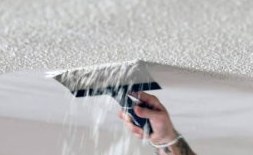
Our Popcorn Ceiling Removal Services
Removing texture is straightforward in principle but the right approach depends on the ceiling's age, condition, and whether it has been painted. Below are the ceiling removal and refinishing services we handle most often around Mount Dora.
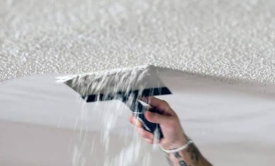
Popcorn Texture Removal
Scraping acoustic and popcorn texture from ceilings under full containment, taking the surface back to bare board.
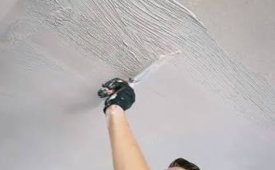
Ceiling Skim Coating and Smoothing
Skim coating the exposed ceiling to a smooth, flat finish so seams and fastener points disappear under paint.
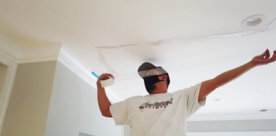
Seam and Fastener Repair After Removal
Repairing the unfinished joints, loose fasteners, and damage that textured ceilings were often applied to conceal.
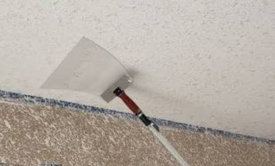
Painted Texture Removal
Removing sealed or painted-over texture that will not soften with water, using the method the surface requires.
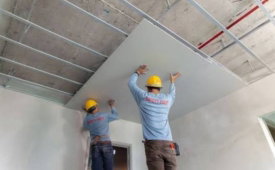
Ceiling Replacement as an Alternative
Replacing ceiling board entirely where the surface underneath is too damaged to make refinishing worthwhile.
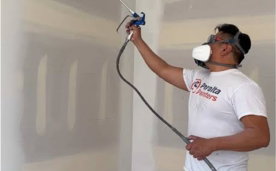
Priming and Paint-Ready Preparation
Priming the refinished ceiling so the topcoat sits evenly and no patched areas flash through the final paint.
Testing, Containment, and What Sits Under the Texture
Testing comes before anything else on an older ceiling. Textured products used in past decades may contain materials that require specialist handling. The only way to know is to have a sample tested by a qualified laboratory. This is not a formality to work around. We will not begin removal on an untested ceiling in a property old enough for it to be a genuine question. If results indicate specialist handling, that becomes a licensed abatement job rather than drywall work. We will tell you straight rather than proceeding. Once a ceiling is cleared, the work moves ahead normally.
The second consideration is what condition the board is in underneath. Textured ceilings were frequently used to avoid finishing joints properly, so scraping often exposes unfinished seams, exposed tape, popped fasteners, and patchy board. That is expected rather than a surprise, but it means refinishing is real work, not a quick skim. Ceilings that have been painted over present a different problem, because paint seals the texture so it will not soften with water, and removal then requires a more laborious approach or, in some cases, boarding over instead. Local humidity affects the schedule too, since skim coats on a ceiling dry slowly overhead and rushing them produces cracking. The room needs clearing and the air conditioning running for the work to go properly.
Textured Ceilings in Mount Dora Properties
Textured ceilings are common across the older housing around Mount Dora. They turn up in a wide range of properties. Homes built across several decades used acoustic texture routinely on ceilings in living areas, bedrooms, and hallways, and many of those ceilings are still in place today. Commercial spaces from the same era, particularly older office suites and converted buildings near the town center, frequently have it as well. Because the practice spanned so many years, age alone does not tell you what a ceiling contains, which is exactly why testing is the sensible first step regardless of how a property looks. We remove textured ceilings from mid-century homes in Tavares and Eustis as well.
The local climate shapes both the condition of these ceilings and the removal process. Long humid summers and hot attic spaces above mean many older textured ceilings have had moisture events at some point, and staining or previous patching shows up once the texture is off. Humidity also slows the drying of skim coats, particularly overhead, so a smoothing program takes longer here than it would in a dry climate and needs the property conditioned. Homes with vaulted ceilings and open plans, common in the newer subdivisions, make the work more demanding because of height and the sheer continuous area involved, and light crossing those large surfaces shows any imperfection in the refinishing.
What Affects the Cost of Popcorn Ceiling Removal
Most people expect the scraping to be the cost, but the refinishing usually exceeds it. A ceiling that scrapes cleanly and reveals properly finished board needs less work than one exposing unfinished seams, exposed tape, and popped fasteners, which is the more common outcome. Ceiling height and area drive labor directly, and vaulted or two-story spaces need staging or lifts that add setup. Rooms that cannot be emptied take longer to protect. Painted-over texture is significantly more expensive to remove than unsealed texture because water will not soften it.
Containment and finishing account for the rest. Proper protection of floors, trim, fixtures, and HVAC systems is part of the job rather than an optional extra, and occupied properties need more of it. Skim coating to a genuinely smooth finish takes multiple coats with drying time between them, so most rooms involve several visits, and humidity extends that. Whether priming and painting are included, whether testing is required first, and whether damaged board needs replacing rather than refinishing all feed into the figure. Request a quote and we will separate removal, refinishing, and priming so you can see where the cost actually sits.
How We Remove and Refinish a Textured Ceiling
Step 1: Inspection and Testing Advice
We inspect the ceiling, assess its condition and whether it has been painted, and advise on testing before any removal begins. Nothing is scraped on an untested ceiling where testing is warranted.
Step 2: Scope, Quote, and Method Discussion
Your quote separates removal, refinishing, and priming, and we discuss whether full removal or an alternative approach suits your ceiling, particularly where texture has been sealed with paint.
Step 3: Room Clearing and Full Containment
The room is emptied where possible and everything remaining is covered. Floors, trim, and fixtures are protected, the space is sealed, and HVAC returns are isolated so debris does not circulate.
Step 4: Texture Removal
The texture is softened and scraped in controlled sections, working to avoid gouging the board underneath. Debris is collected as we go rather than left to accumulate across the protected floor.
Step 5: Surface Inspection and Repairs
With the ceiling bare we assess the board condition, then repair unfinished seams, re-tape where needed, reset popped fasteners, and patch damaged areas before any smoothing begins.
Step 6: Skim Coating to Smooth
Skim coats are applied across the full ceiling and built up in passes with proper drying time between them, so the finished plane is consistent rather than showing the old seam lines.
Step 7: Sanding and Raking Light Check
The ceiling is sanded smooth and inspected under raking light from several angles. Anything that shows gets corrected now, because primer will not hide it and paint will emphasize it.
Step 8: Priming, Cleanup, and Walkthrough
The ceiling is primed so paint will sit evenly, debris and protection are removed, the room is cleaned thoroughly, and we review the finished surface with you under the room's own lighting.
Get a Clear Quote on Your Project
The next step is a straight conversation about the space itself. Tell us what you are dealing with, send through photos or plans if you have them, and we will let you know what the work involves, how long it should take, and what it will cost. There is no obligation attached to an estimate, and we would rather spend the time getting the scope right than hand you a number that changes halfway through the job.
Mount Dora Drywall Pros works with homeowners, builders, property managers, and business owners across Mount Dora and the surrounding Lake County area. Request a quote or check availability. You will get a clear answer on timing rather than a vague callback promise. If your schedule is tight or you are coordinating around other trades, tell us upfront. We will plan the work around it.
Related Services
Drywall Repair · Drywall Patching · Water Damage Drywall Repair · Drywall Ceiling Repair · Residential Drywall Repair · Drywall Replacement · Commercial Drywall Repair · Drywall Installation · Residential Drywall Installation · Commercial Drywall Installation · Garage Drywall Installation · Metal Stud Framing · Drywall Partition Installation · Fire-Rated Drywall Installation · Moisture & Mold-Resistant Drywall Installation · Soundproof & Acoustic Drywall Installation · Suspended Ceiling Installation · Drywall Finishing · Drywall Taping & Mudding · Drywall Texture Matching · Drywall Painting & Finishing