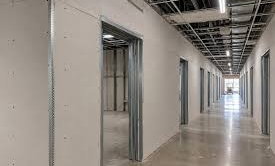
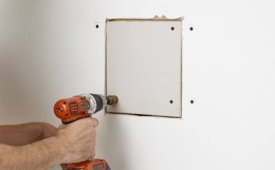
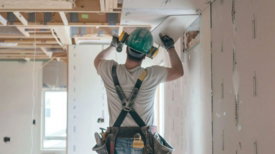
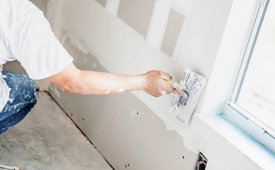
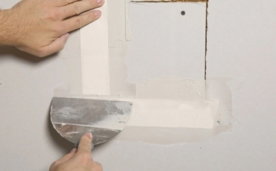
In a commercial building, damaged drywall is rarely just a cosmetic problem. A scuffed corridor wall shapes what customers think about the business before anyone greets them, a hole near a fire door can compromise an assembly that has to hold a rating, and a sagging ceiling tile above a workstation becomes a liability conversation. Mount Dora Drywall Pros repairs drywall in commercial properties across Mount Dora and Lake County, including offices, retail units, restaurants, clinics, warehouses, and multi-tenant buildings. The repairs themselves range from a single impact patch to recurring damage along a high-traffic route that needs a more durable answer than another skim of compound.
What separates commercial repair from home is everything around the work. The building is usually open. Staff and customers are moving through it. The repair has to fit into hours that do not interrupt trade. Access may need clearing with a property manager. Dust has to stay out of shared air systems. The space normally needs to be usable again by the next morning. We plan repairs around your operating hours rather than ours, work in phases where a whole area cannot be closed at once, and leave the space clean at the end of each shift. Send through photos or a scope list and request a quote. We will tell you what the repair involves and when we can be there.
Can repairs be done overnight or on weekends so we do not lose trading hours?
Yes, and for most retail, hospitality, and customer-facing tenancies it is the sensible approach. We regularly run evening, overnight, and weekend shifts so the space is back in service before opening. It needs agreeing at quoting stage because after-hours access has to be arranged with the property manager or landlord, security arrangements may apply, and it affects crew scheduling and price. Tell us your operating hours when you request a quote and we will build the program around them.
How do you know whether a damaged wall is fire-rated?
We check rather than assume. Corridors, stairwells, demising walls between tenancies, and walls around service risers are the usual candidates. The building's fire plan or original construction drawings will confirm it. Visual clues help too, including double-layer board, specific board types, and firestopping at penetrations. If a wall is rated, a cosmetic patch is not acceptable, because the assembly has to be restored with the correct materials and build-up. We will tell you if the repair you asked for is actually a compliance item.
Our ceiling has a water stain. Can you just replace that section?
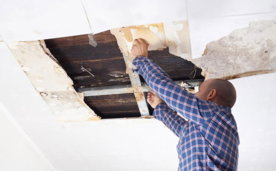
We can, but not before the source is dealt with. Replacing stained board while a roof, pipe, or condensate leak is still active means the same repair will reappear, usually within months. We inspect the area to see whether it is still wet, check the extent of the affected board, and let you know what needs resolving first. Once the leak has been fixed and the cavity has dried out, we cut back to sound material, replace the board, and blend the finish into the surrounding ceiling.
Can you handle a list of repairs across a whole building in one program?
That is usually the most efficient way to do it. Rather than separate callouts for each item, we walk the property, compile or price your existing scope list, and schedule the work in a sequence that suits the building and its tenancies. Grouping repairs reduces the number of setups and clean-downs, which brings the cost per item down. It also gives you one set of documentation covering everything completed, which is useful for maintenance records and end-of-lease reporting.
The same corner keeps getting damaged. Is there a better fix than patching it again?
Almost always. Repeated damage in the same place is a traffic problem, not a drywall problem. Patching it on a cycle costs more over a few years than fixing it properly once. Depending on the location, the answer may be metal corner bead in place of a softer profile, corner guards, a more impact-resistant board in that section, or a physical barrier that keeps carts and gear off the wall. We will point out where this applies rather than quietly re-patching the same spot every quarter.
Will your work disturb neighboring tenants in the building?
We plan the job so it does not. Noise from cutting and screwing travels through demising walls and structure. That work is scheduled for hours the building permits. Dust is contained with sealed barriers and negative air where needed. HVAC returns in the work area are isolated so nothing travels into adjoining suites through shared systems. Corridors, elevators, and shared entries are protected and kept clear. Where a neighboring tenancy is particularly sensitive, we discuss extra measures during the site walk.
What Does My Drywall Project Cost?
Drywall is priced by the square foot of wall and ceiling surface — not by the size of your floor. That one fact explains most of the gap between quotes. Here are the ranges we see on real jobs around Mount Dora, and a calculator built on the same numbers.
Drywall Repair & Patch
Most single repairs land between $250 and $800. Pros price patches by the square foot of damaged area — roughly $55–$75 a foot around Mount Dora — but every repair carries a minimum job charge, because a patch takes the same setup and the same repeat trips for drying coats whether it's the size of a dinner plate or a door. Grouping several spots into one visit is the cheapest way to fix them: they share one minimum. Some repairs are priced flat by the job instead of the square foot: a cut-out ceiling section replaced and texture-matched (an 8×10 section ran $720 flat), long seam cracks (46 linear feet of re-taped seams across three rooms ran $540 flat), and popcorn removal finished smooth (230 sq ft ran $575 flat).
New Drywall Installation
For bare studs finished paint-ready (a standard Level 4 finish), plan on $1.60–$3.00 per sq ft of wall and ceiling surface, materials and labor included. A typical 12×12 bedroom with 8-foot ceilings — that's 528 sq ft of surface — runs about $890–$1,670 around Mount Dora.
Room Remodel & Replacement
Tearing out old drywall and hauling it off adds $0.60–$1.25 per sq ft on top of new installation — a combined $2.20–$4.25 per sq ft. That same 12×12 bedroom, gutted and re-drywalled, runs about $1,210–$2,330. Opening walls can uncover surprises — water damage, old wiring — and those get priced once they're visible, never guessed at in advance.
Garage Drywall
Garages run $1.55–$3.30 per sq ft depending on finish. Code requires 5/8-inch fire-rated (Type X) board on the wall shared with the house, and on the ceiling when there's living space above it — that's the fire separation, not an upsell. Most two-car garages land between $1,900 and $4,100 finished.
Texture, Skim & Paint
On walls that are already up: skim coating runs $0.95–$1.30 per sq ft, orange-peel or knockdown texture $0.80–$1.85, and primer plus two coats of paint $1.05–$2.85. A typical room's walls — about 415 sq ft of surface — usually land between $770 and $1,960 for texture and paint together.
What Moves the Price
Finish level. A full Level 5 skim coat (for gloss paint or bright, raking light) costs more than standard paint-ready Level 4.
Ceilings. Overhead work runs roughly 20–25% more than the same area on a wall — lifts, heavier board, two sets of hands.
Ceiling height. Taller walls mean longer sheets, scaffolding, and slower work.
Texture matching. Blending a patch into existing orange peel or knockdown is hand work, and it's priced like it.
Tear-out. Removing old drywall and disposing of it is its own line on the quote.
Job size. Small jobs carry a minimum charge; on big jobs the setup spreads over more feet, so the per-foot price drops.
These are planning ranges, not a quote — your final price is confirmed after an in-person look, before any work starts.
A note on materials. These ranges are figured with standard drywall board and the finish level you pick above. Board isn't all the same price, though: moisture- and mold-resistant board — the green or purple board for bathrooms and basements — costs more a sheet than standard board, and on a big job that can push you toward the top of your range, or a little past it. Tell us where the work is and we'll confirm the exact board and the price at the in-person estimate, before any work starts.
Estimate Your Project
Measure the damaged section itself — length × width. A full 4×8 sheet section is 32 sq ft.
Spots done in one visit share a single minimum charge.
Price includes tearing out the old drywall and hauling it off.
Includes 5/8″ Type X fire-rated board on the wall shared with the house — and on the ceiling when there is living space above it — as code requires.
Your estimated range
Free — no obligation. Your calculator numbers ride along with the request.
Send Your Project to Mount Dora Drywall Pros
Your estimate is attached automatically. Add your info and — if you can — a few photos of the project. Photos help us price the job before we ever set foot in the house. Prefer to talk? Call (352) 623-5928.
Why Property Managers and Businesses Choose Us
Commercial repair work is judged on disruption as much as on finish quality. Mount Dora Drywall Pros is used to working inside buildings that stay open, which means we arrive with containment planned, work the hours agreed, and leave the area serviceable rather than cordoned off indefinitely. For property managers handling multiple tenancies, we can work through a list of repair items across a building in one program instead of stringing out separate visits, and we document what was done for your records.
We also pay attention to what the wall is, not just what it looks like. Damage in a corridor, stairwell, or demising wall may sit within a rated assembly, and a patch that ignores that quietly undoes the rating. We check before cutting and repair those areas to the correct build-up. Where the same spot keeps getting damaged, we will tell you honestly that repeated patching is the expensive option and suggest a more durable detail. You get clear scope, clear pricing, and a crew that understands that a live building has rules. Check availability and we will let you know how quickly we can schedule you in.
Our Commercial Drywall Repair Services
Damage in commercial buildings follows patterns that home properties never see, mostly driven by traffic volume, gear, and building systems running overhead. The repairs below are the ones we are called out for most often across offices, retail spaces, and industrial units around Mount Dora. When a space needs new partitions rather than repairs, we handle commercial drywall installation as well.
High-Traffic Wall and Corridor Repair
Repairing impact damage, gouges, and worn corners along corridors, entryways, and loading routes that see constant use.
Rated Assembly Patch Repair
Restoring damaged sections of fire-rated walls and corridors to the correct assembly build-up rather than a cosmetic patch.
Ceiling and Overhead Repair
Fixing ceiling damage from leaks, service access, light fitting changes, and trades working above the grid line.
Post-Tenant and Make-Good Repairs
Bringing a vacated unit back to a lettable standard by repairing fixings, anchor holes, signage mounts, and shelving damage.
Repairing problem areas that keep failing and advising on corner protection or more durable detailing at the same time.
Working Around Trading Hours and Occupied Tenancies
Scheduling is the first thing we sort out on a commercial repair, because it changes the method more than the damage does. A retail unit may only allow work before opening or after close, an office might prefer evenings, and a clinic or food service tenancy will have its own constraints around dust, noise, and hygiene. We confirm permitted working hours, access arrangements, and whether a building contact needs to be present during the site walk. Shared corridors, elevators, loading areas, and basement parking all affect how material gets in and how long setup takes, and properties with active neighboring tenancies usually need noisier work moved outside trading hours entirely.
Dust control is the second planning point. Commercial buildings share HVAC systems. Sanding in one suite can carry dust into another tenancy if the work area is not sealed or the return is not isolated. We contain the area, use negative air where the situation calls for it, protect finished flooring and shared routes, and clean at the end of each shift rather than the end of the job. Egress routes stay clear throughout. Before cutting into a wall we also check what is behind it, since commercial partitions carry data cabling, conduit, and fire suppression lines that are not always where the drawings say they are. We confirm whether the wall forms part of a rated assembly.
Commercial Buildings and Wear Patterns in Mount Dora
The building stock around Mount Dora produces fairly predictable damage. Older commercial properties near the town center have been divided and refitted repeatedly. You often find layered repairs, mismatched textures, and partitions built to different standards behind one continuous-looking wall. Anchor holes from previous tenants, patched signage mounts, and corners worn back over decades are common in these spaces. Along the newer commercial corridors, the damage skews toward impact from gear, with cart scuffs in retail units, forklift and racking contact in warehouses, and cable-related openings in offices that have been re-fitted for new technology. We see the same wear in downtown storefronts in Sanford, Eustis, and Leesburg.
Local conditions add to the list. Warehouses, workshops, and unconditioned back-of-house areas swing between hot and humid across the long summer, which softens board over time and loosens fasteners around fixings. Buildings with wide roof spans move with temperature, so cracking at the head of partitions and along ceiling junctions is common and tends to return unless the detail is addressed rather than just filled. Storm season brings roof and flashing leaks that show up first as ceiling staining in the tenancy below, and those need the source fixed before any board is replaced or the same repair will be back within the year.
What Drives the Cost of Commercial Repair Work
Access and timing dominate commercial repair pricing. Work restricted to nights, early mornings, and weekends to protect trading hours carries a different rate than standard-hours work. Repairs at height, above racking, or over fixed gear, and in areas requiring lifts or scaffolding, take longer to set up than they do to execute. The number of separate repair locations matters as much as their size, since each one involves its own containment, setup, and clean-down, and a scattered list across several floors costs more than the same footage in one room.
The wall itself is the other variable. A cosmetic patch in a standard partition is straightforward. Restoring a fire-rated assembly means matching the specified board, layering, and firestopping, which takes more material and more time. Texture and finish matching adds passes, particularly in older buildings where surfaces have been refinished over the years. Beyond that, containment requirements, the level of protection needed for finished floors and fittings, whether painting is included, and how debris must be removed from the property all feed into the figure. Send a scope list or photos when you request a quote and we will price the items properly instead of guessing.
How We Deliver Commercial Repairs With Minimal Disruption
Step 1: Scope List, Photos, and Site Walk
You send a list of repair items or we walk the building and compile one. We identify what each repair involves, flag anything sitting in a rated assembly, and note access and working-hour constraints.
Step 2: Written Quote and Schedule Agreement
You receive itemized pricing covering each repair area, the finish level, containment requirements, and the shifts we propose to work. Building access and any property manager approvals are confirmed before we book dates.
Step 3: Access, Isolation, and Site Protection
We arrive at the agreed hours and protect flooring, fittings, and shared routes, seal the work area, and isolate HVAC returns where sanding dust could travel into other tenancies. Egress routes stay clear at all times.
Step 4: Damage Removal and Cavity Check
Damaged board is cut back to sound material and framing. Before fitting new board we check the cavity for cabling, conduit, moisture, and firestopping that may have been compromised by the original damage.
Step 5: Board Replacement to Correct Assembly
New board is fitted and fastened to match the existing construction. Where the wall forms part of a rated or acoustic assembly, the correct board type, layering, sealant, and firestopping are restored.
Step 6: Finishing and Texture Matching
Joints are taped and built up in coats, feathered wide enough that no edge catches the light, then blended to match the surrounding texture and finish level.
Step 7: Clean-Down and Space Handback
Dust and debris are removed to the designated point, protection is lifted, and the area is returned to a usable state at the end of each shift rather than at the end of the job.
Step 8: Walkthrough and Documentation
We walk the completed items with your building contact, confirm each one against the scope list, and provide documentation of what was repaired for your maintenance or compliance records.
Get a Clear Quote on Your Project
The next step is a straight conversation about the space itself. Tell us what you are dealing with, send through photos or plans if you have them, and we will let you know what the work involves, how long it should take, and what it will cost. There is no obligation attached to an estimate, and we would rather spend the time getting the scope right than hand you a number that changes halfway through the job.
Mount Dora Drywall Pros works with homeowners, builders, property managers, and business owners across Mount Dora and the surrounding Lake County area. Request a quote or check availability. You will get a clear answer on timing rather than a vague callback promise. If your schedule is tight or you are coordinating around other trades, tell us upfront. We will plan the work around it.
Recent Project in Mount Dora, FL
Drywall ceiling repair in Mount Dora, FL
Homeowner: Beth — Mount Dora, FL
The problem: A roof leak had stained the ceiling and the board sagged in one corner.
What Beth told us: Beth had the roof fixed first. Then she wanted the ceiling sound and clean before guests came for the holidays.
Scope of work: Cut out a water-stained section of ceiling board, fit new board, taped the seams, and matched the light knockdown texture.
Materials and gear: Half-inch drywall board, joint compound, knockdown texture. Size: 80 sq ft (8 by 10 ft).
Final price: $720, with 1 day on site.
Cost note: Small ceiling repairs run higher per foot than full rooms because of setup, texture match, and dust control.
Outcome: The ceiling is flat and the stain is gone. Beth said guests never spot the repair.